
Lawrence Stormwater 101
Like most cities, managing stormwater is a major challenge for Lawrence. Increased frequency of extreme weather and heavy downpours overwhelms older systems designed for smaller storms leading to flooding. As Lawrence urbanized, impervious surfaces (concrete/asphalt) increased, leading to more water pollution and more flooding. Many cities rely on pipes and culverts that are deteriorating or undersized, leading to sinkholes and maintenance backlogs.
The City of Lawrence operates and maintains 178 miles of sewers and over 4000 catch basins to manage stormwater. We know a lot about the system. Some sewers are only a few inches wide, while others are 10 feet high; some are made of concrete or plastic, but the oldest are often made of brick in the shape of an egg. This interconnected network of sewers is very complex, and we thought it would be helpful to define basic stormwater terms to increase residents’ understanding of the infrastructure.
What is stormwater?
Stormwater is water from rain or melted snow that flows into the street or storm drains instead of soaking into the ground. In the city, rain hits hard surfaces like roads, driveways, and roofs. Since it can’t soak into the ground, it “runs off” toward the lowest point. This runoff is collected by catch basins and then flows into a stormwater sewer or a combined sewer. When rain falls in a forest it enters a highly efficient management system that functions like an umbrella, a filter, and a sponge. The forest slows rainwater down and it eventually infiltrates into the soil, runs off into a stream, or plants take up water through roots and release it as a vapor.
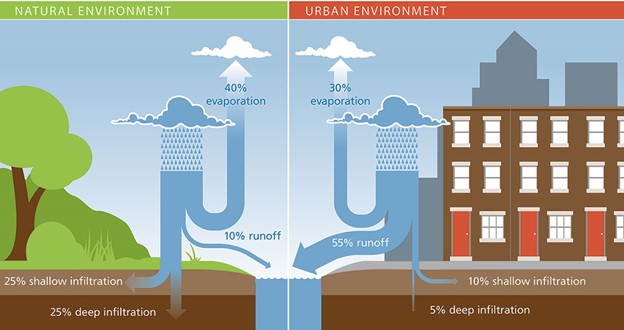
Source: Philadelphia Water Department
Sewer System Types in Lawrence
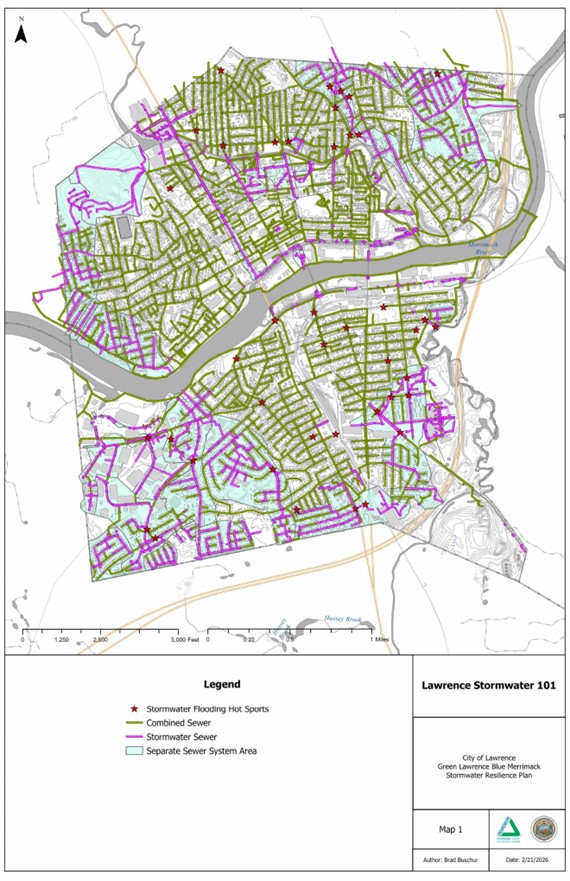
Lawrence is serviced by combined sewer system and a separate sewer system. Combined sewers collect both stormwater and wastewater. A separate sewer system is comprised of a pipe for wastewater and a pipe for stormwater. Combined sewers replaced open drainage systems in the 1800s. In the 1900s there was a gradual shift toward separate sewer systems. The map below highlights areas serviced by these systems.
What is a combined sewer system?
Around 70% of Lawrence is serviced by a combined sewers system. This infrastructure manages wastewater from homes and businesses along with stormwater runoff in the same pipe. Wastewater is water that has been affected by human activities. Wastewater comes from our toilets, sinks, showers, and laundry. It is also a byproduct from manufacturing, food processing, and chemical production. Prior to 1977 nearly all wastewater was discharged directly into the Merrimack River. Today, the combined sewers flow to interceptor lines until they reach the Greater Lawrence Regional Sewer Authority’s treatment plant where the wastewater is chemically and physically treated before discharging into the Merrimack River.
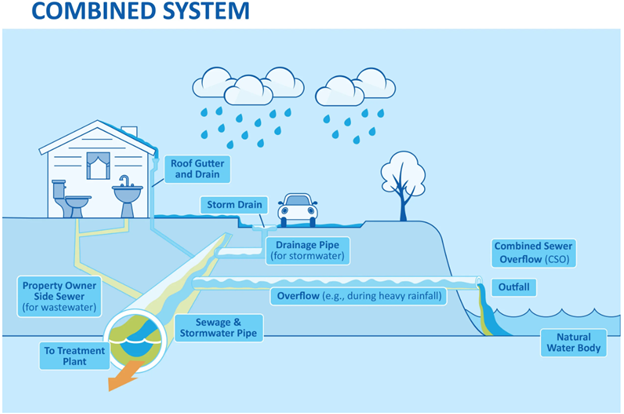
Source: Seattle Public Utilities
What is a separate sewer system?
Around 30% of Lawrence is serviced by a separate sewer system. This system uses two distinct, dedicated pipe networks to manage water: a sanitary sewer for wastewater and a stormwater sewer for stormwater. A sewage pipe transports wastewater to the Greater Lawrence Regional Sewer Authority’s treatment plant where it is chemically and physically treated before discharging into the Merrimack River. Drainage pipes are stormwater sewers that collect and redirect excess rain and snowmelt from hard surfaces like streets, parking lots, and rooftops to prevent flooding. They typically discharge directly into rivers, lakes, or streams without treatment.
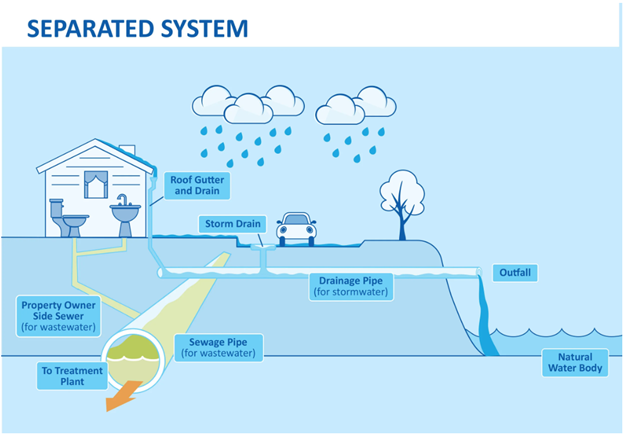
Source: Seattle Public Utilities

